Saturday, March 29, 2014

My Connections to Play

inspirational quote - illustration art print office art illustration quote by dazeychic
“Play is the highest form of research.” ~ Albert Einstein (scientist)
“Play is…more than just fun. Plenty of play in childhood makes for happy, smart adults – and keeping it up can make us smarter at any age.” Stuart Brown (author of The Neuroscience of Play)

As a young child, I truly believe that aside from my father's direct teaching, my mother's undying passion for reading with us, eating, and sleeping I spent every other waking moment engaged in some form of play.  We lived next to an empty lot on a sparsely developed dead-end road which backed up to a steep ravine with creek at the bottom.  There were only three other young families on the street and all of those children become my nearest and dearest friends.  We explored from sunrise until dinner, and never found ourselves bored.  Our bicycles were our mode of transportation and it seemed that we were on-the-go as long as the weather permitted.  
Our swingset was a castle, a pirate ship, a roller coaster...the wind used to try to keep us from ever reaching our destinations...we lived, like Alice, in Wonderland where the flowers and grasses were taller than us...we held grand tea parties along the banks of a "mighty river"...the trees we climbed served as locked towers, fire poles, and look-outs.  We knew the landscape like the backs of our hands, but every day was a new adventure.
My parents, and the parents of my friends, seemed to allow us unlimited play time.  While I am sure that they knew basically where we were, they never intervened.  We were free to make our own rules, devise our own games, and handle our own interpersonal conflicts.  In addition to this free play time, my parents loved to travel, hike, and visit interesting places.  They seemed to enjoy a new expedition just as much as we did.  My mother had a "teeny tiny town" that she loved to look at as we traveled East to the ocean, where she used to daydream about living.  My father had always dreamed of flying a plane, so swings and bicycles were often made into airplanes.  He also loved to swing on vines in the forest and try to pretend we were lost to see if we could find our way out of the woods.  My grandmother loved to take us on berry-picking walks where she would teach us about edible plants, tell stories, and pretend that were Little Red Riding Hood.  The elderly neighbors on our street supported our wild imaginations by buying our homemade crafts and letting us play among their lawn ornaments. 
Play for young children today is drastically different in many places.  Society, expectations, and the environment have changed.  There are fewer "green" spaces to explore, less "unscheduled" time, and more obligations to academic pursuits.  As most children find their free time filled with structured activities, this is where children seem to congregate and interact.  There are play groups, story times, sports and classes.  My hope for the future is that adults will look back to their pasts and remember the sheer joy in uninhibited free play.  Even if the environment has to be a little more controlled, it would be incredible for play dates to turn in to "free play dates" and structured activities would involve more interaction and less "do what I do".  
Personally, I look forward to the time when the weather gets warmer, schedules relax some, and children can once again venture outside.  While there is still a great deal of supervision necessary in today's world, children can begin to more openly explore the world around them when they are not confined by the intensity of everyday life.  Even they can appreciate the calm that comes from a relaxed adult as they join in a game of Tag or become a guest at an outdoor tea party.  As adults, one of the greatest gifts we can give our children is a degree of freedom and the security that comes when they know we value their interests and their "work".

PLAY               Be a playful parent!

Saturday, March 15, 2014

Relationship Reflection

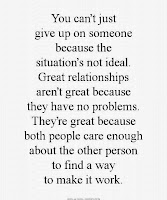
I find this to be true in all relationships.  While the circumstances are all different, and the situations span over various lengths of time, the people we encounter in our lives are there for a reason.  We learn from each other and build better versions of ourselves through our interactions.  Relationships are not easy, and they require reciprocal effort.  They do not always last, but they are all a part of who we are today.
As I reflect upon my current relationships, I think about those friends and family who support me on a daily basis.  I think about my professional contacts and clients who cause me to work my hardest.  I think about people who have faded out of my life, and how my past interactions with them have resulted in building the platform which I stand on today. I realize that I am who I am through my gains from them.  I value each and every relationship for a multitude of reasons...
My family is my rock.  They challenge me to soar and keep me grounded all at the same time. I always have their unconditional love and support.  My husband, children, and mother have made the fulfillment of my dreams possible and I do my best to return the favor each and every day.  I truly cherish the times when we can slow down and truly appreciate each other. 

My friends provide another type of support.  I have a small, but incredibly valuable circle of friends.  We do not live near one another, but thankfully, due to technology we manage to stay close.  We are all busy professionals and mothers, who have very little time for phone calls and lunch dates, but somehow each and every time we talk we are able to pick up right where we left off.  On occasion, we have the luxury of planning small trips together, but sometimes it is just the perfectly timed card in the mail or posted flashback photo that restrengthens our bonds.  As life has taken us through some pretty difficult times, we have never faltered in our ability to hold each other up and I am thankful each and every day in knowing that they are there.

There is no doubt in my mind that I would not be where I am today without the professional relationships in my life.  When I first entered the world of early childhood education, I was fortunate to be surrounded by fellow educators who were all of similar mindset and never let their passion for the profession fade, even when faced with adversity.  Over the years we have all gone our separate ways, but have managed to keep in touch.  I know center directors, small independent preschool directors, Head Start teachers, women who dedicate their lives to infant development, fellow business owners, elementary school teachers, early intervention specialists and instructors.  Not only have I been able to maintain these relationships through periodic contact, scheduled visitations, referrals, and through the solicitation of professional advice, but I am working on building solid relationships with my children's teachers as well.  It is refreshing to be able to discuss the progress of my own children with the understanding that we all want what is best for them.  

The benefit of the children should always be the focus, which is why I operate my own facility in this fashion.  I have formed very strong partnerships with the families of the children in my care.  Even when challenging situations arise, we are able to have discussions regarding the best methods by which to proceed.  We share information and respect one another's opinions.  I have come to know each and every family quite well, both the nuclear family in the home and many of the grandparents, aunts, uncles, and cousins in extended families through school events, recitals, and birthday celebrations.  While I enjoy getting to know families because it helps me understand the children better, I think they feel more secure about the care of the child when they get to know me and my family on a more intimate level.  Through these partnerships, we can all feel confident that the child is in a safe, nurturing environment where they will thrive.   

As humans, we desire to have social interactions with others.  Our interactions may not always be positive, but they can all be learning experiences.  Not only have I learned in incredible amount from the relationships in my life, but I have also learned a great deal about myself.  As I move through life, I learn what works and what doesn't.  I can recognize when things need a little tweaking or are better left alone.  I understand that I need to build a better relationship with myself and that sometimes it is perfectly acceptable to want to be alone.  I feel that this type of reflection is integral to becoming a positive professional and maintaining our passions.  When we can grow from our foundations with the confidence to strike up a conversation with a stranger or set out on a new path, knowing that we have a base to fall back on, we can truly climb mountains.  

Julie Fowlis - Touch The Sky w/ Lyrics

Saturday, March 1, 2014

As my journey continues...

To The World You May Be On Person...

In honor of the late, great Dr. Seuss (a.k.a. Theodore Geisel) on the eve of his birthday, I would like to thank him and his contributions to the world of early childhood education.  While his life was much like that of many of our own, he always felt the need to recognize and act upon global injustices usually through his unique cartoons.  Eventually in a moment of financial need, he was asked to accomplish a seemingly impossible task--to use only 225 words to create a book that would be more intriguing and entertaining to children than TV. By utilizing his passion, his odd-looking characters, and simplicity that reached right into the childhood mind, his series of books that we have grown up with and loved began.  He has been replicated, translated, and enjoyed all over the world, as his seemingly simple text continues to influence the realm of early childhood  education in a very important and meaningful way.  

What I have learned from Dr. Seuss's story is to never lose your passion.  Life can throw some incredible curve balls, but as long as you can hold on to your roots and dreams, what seems insurmountable can indeed become a very attainable reality.

I would like to take this moment to thank all of you, as well, as you are becoming part of my journey.  We learn together, share in struggle, and keep our heads up with our eyes on a more positive future.  Good luck to all of you as your own journeys continue! Here are some more sources of inspiration to keep you going.


Let them be little and love them like there's no tomorrow.  For my future classroom/office :)


would love this in L's room!!!


Saturday, February 15, 2014

Putting testing to the test


As an early childhood professional, my first commitment is to the overall well-being of children.  Most interconnected disciplines of early childhood studies, i.e. education, psychology, medicine, sociology, safety, nutrition, physical education, occupational therapists often utilize assessment and testing in order to determine and support appropriate practices.  Much of our current society asks the field of early childhood education to regularly test and assess our youth--not necessarily in the best interest of the children--to determine funding, program structure, supply/demand structures, and maintenance of educational establishments.  What amount of measurement and testing is effective and ethical?

I am a supporter of early intervention programs and routine medical screenings for our young children.  I also feel that there should be a greater openness in receiving families' questions and concerns about their children and their immediate environments.  We should offer opportunities for families to request particular assessments and tests if there is a substantial reasoning behind it.  Significant adults (family members, caregivers, teachers, and group leaders) in children's lives are the first line of defense when it comes to their well-being, instead of the the fifteen minute yearly visit to the pediatrician who sees thousands of children in that time, or the lawmakers and financial backers within the early childhood construct.

There can be great benefit to the child who's psychological or cognitive processing disorder is diagnosed so that they may receive the support they need to be successful.  It is helpful for physical conditions to be recognized and accepted so that children can participate healthfully and appropriately with their world to the best of their ability.  Children who are considered gifted or talented in a particular area will thrive when provided appropriate programming from well trained educators.or professionals.  I believe, however, that there comes a point where the testing and labeling can become detrimental to overall development.

As symptoms, medications, societal definitions, and basic requirements of successful life change, so do labels.  It can often be hard to determine a benchmark or a "normal" range for behaviors, physical symptoms, or performance in a particular area due to the differences in all humans.  Not only must you consider the person in question, but also the test construction and evaluation process.  Uncooperative, nervous, or stressed children may not provide accurate results.  There are vast differences in short-range vs. long-term data.  Medicines are often changed so frequently, that true data collection is a challenge.  Who determines these labels, and to what benefit? Even positive labeling can have negative effects on the particular child or their family members.  "Gifted" children are often held to exceptionally high standards overall, not just in the area where they excel, which can lead to self-doubt in other important areas of their development.  The "other" children in a family may feel the pressure to keep up rather than be appreciated for the person that they are.  A child with a condition that needs a greater level of attention, may attribute to other children feeling alienated.  Not to mention, that vast amounts of testing may cause children to feel like they are constantly being expected to "perform" instead of being allowed to life freely.

Testing of children is performed across the globe, and the same concerns appear in most nations.  This then leads to nations having skewed view of themselves and others.  As we well know, different does not mean wrong, it just means different.  In a nation where verbal skills are highly regarded, they may lag in mathematical scores.  In areas where social well-being and group success is valued and strongly developed, all test scores may appear below-average, even if they far surpass many other areas of the world in cooperative tasks.  As parents and leaders assess world politics, there may be a shift in childhood expectations based on statistics instead of developmental well-being and cultural variations.  

Overall, I think that the most important to remember about labels is that they do not define a person.  They should be used to afford all people with the opportunity to thrive and succeed to the best of their ability, by having the means and measures to access necessary tools.  If we can redefine society and reconstruct the labeling system to value individuality, we can move toward a more positive and accepting world.  

Resources

Benson, E. (2003). Intelligent Intelligence testing. American Psychological Association, 34(2). Retrieved from http://www.apa.org/monitor/feb03/intelligent.aspx

Sunday, February 2, 2014

War Worries

Early childhood is already a time period in life full of change and a flooding of information.  It is a time when children are first learning how to navigate their world and interact with their fellow humans.  When additional stressors come into play, they can play a substantial role in how a child develops.

My neighbors are immigrants to the United States from Albania.  They were in their early twenties, with a two year old, when the Albanian Civil War broke out.  During this time they were often forced to stay in their homes for days at a time while the ugliness of war riddled their town.  There was extensive rioting, protesting, and general civil unrest, due to deep dissatisfaction with a government that failed to protect the assets of its citizens.  Residents felt compelled to protect their homes, money, and family at any cost. This meant being subjected to random gunfire, smoke bombs, tear gas, and other means and measures used to control large mobs, and/or settle civil disputes (legal or illegal) (Global Security.org). Throughout this, the family also learned that they were due to welcome their second child.

The family unit was strong, but travel to visit other friends and relatives was hazardous.  As such, the family was forced to be self-sustaining with very little money.  They realized that this was not the life they wished for their children, and chose to join friends here in the US, who had come to live here before the war.  In 2004, they became our neighbors.

We have watched the children grow up, very happily and hard-working, but their life is much different than typical American children.  First off, they had to learn a new language and start in American schools at ages 10 & 6.  While in Albania, the eldest child saw little of school and the youngest had never been, because of their condition and also because typically in Europe, children start school closer to age 7.  Thankfully, it didn't take them too long to adjust. The children were active soccer players and the family found support in their church and Albanian groups here. The family unit continues to remain strong, and in effect, the children are bound to familial duties before they are permitted to socialize with their friends or engage in other social activities.  The boys, despite a decent age difference, were often best playmates.  For the most part, the children seemed to suffer little, however, there is one time of the year which is particularly difficult for them.

During Fourth of July celebrations here, the random shooting off of fireworks, summer firework displays, and the frequent explosion of sound, all meant in fun and support of the holiday, set the entire family on edge.  These sounds remind them of difficult times, which they were fortunate to leave behind.  We have spoken to them about it and the mother often feels guilty for her feelings.  She is so thankful for America and all that is has to offer, but the fear of her past overwhelms her.  The family is often found together, at home, inside while the rest of us revel in our freedoms.

Thinking about them, coming from the far Southeast portion of Europe, made me wonder about conditions for the children living in the furthest stretches of Northeast Europe, where my heritage lies.  I imagined that the conditions were similar, and that they share several influences from both Europe and the Western portion of Asia, namely Soviet entities. It seems that the overall economic conditions have improved for these nations since the unrest during the 1990's and early 2000's.  Since the dissolution of the Soviet rule, these nations have been growing and improving rapidly.  As the economic factors have improved, improvements have been made to the educational, cultural, and social conditions.  Pollution has been reduced.  Park systems and public programs are on the rise; and this generation of families is indicating greater levels of happiness and prosperity.  Generally speaking, when the daily stressors of employment and finances are lessened from the equation, the result is happier, healthier children. Unfortunately, like most nations, there are areas where families are still affected by poverty and inadequate living conditions.  The governments have instituted public assistance, but due to the pride and self-sustainability of the people they have been slow to take.

References

European Roma Rights Centre. (2011-2012). Slovakia:  A Report by the European Roma Rights Centre, Country Profile 2001-2012.  Retrieved from http://www.errc.org/cms/upload/file/slovakia-country-profile-2011-2012.pdf

Global Security.org (n.d.). Albanian Civil War (1997). Retrieved from http://www.globalsecurity.org/military/world/war/albania.htm

National Geographic Kids (n.d.). People & Places: Poland. Retrieved from http://kids.nationalgeographic.com/kids/places/find/poland

Saturday, January 18, 2014

Breastfeeding as a Public Health Concern

It has been proven time and time again that breast milk is best for newborn babies and that the process is integral for nurturing positive bonding between children and their caregivers. There is a wealth of information and support for breastfeeding that is readily accessible, yet so many women in modern societies choose against it.  Those that choose to start breastfeeding, also do not generally do so for very long.  Why the shift in ideals?  Some women stop breastfeeding due to complications or medical issues, but I think that for the most part the decision to choose alternate feeding methods, especially in more industrialized nations is based on social stigma and lack of support.  While I am happy to see a resurgence in acceptance for the practice, and more facilities available to women, I still feel that a much greater effort needs to be made in order to protect the rights of families.  I also feel that in today's society it is just too easy to give up on the process.  There are a multitude of formulas and medical interventions that tend to be more convenient than breastfeeding, especially for mothers who must return to work early on in their newborn's life. Even returning to work in a child care facility, I found it difficult to continue with effective breastfeeding for my second child.  

Reflecting on this topic, I found myself thinking of a colleague of mine who moved to Northern Alaska to teach children of Eskimo, Inuit, and other Northern/Arctic Native cultures.  I was wondering if the remoteness of their villages made breastfeeding more of a priority.  What I discovered was that their distance from more "connected" locations meant little.  They still exist within the confines of developed nations which offered similar resources to all residents.  Countries like Russia, the US, Canada, Norway, Sweden, and the like, distribute information and resources to even the farthest reaches of their boundaries.  Luxuries such as worldwide shipping and the Internet allow for the sharing of information and goods.  The result is the same decline in percentage of breastfeeding mothers.  Programs intending to increase numbers contain all of the same facts and figures that you would find in any current facility.  The only difference that I discovered was a greater reference to "honor" and "respect"; words which hold great weight in many Native cultures.  

My discoveries surprised me a bit, and I realized that the most important thing that I can do to support breastfeeding families is to continue to share information and resources, advocate for the families' choices, provide references, and share my own stories regarding my own experiences.